Boiling Lake hike at a glance
- The hike to the Boiling Lake in Dominica is one of the most spectacular, but also one of the most exhausting trails in the Caribbean. You climb through dense rainforest, over windy ridges and through the steaming Valley of Desolation to the second largest boiling lake in the world.
- About 11 km, almost 2,000 metres of up and down, 7.5 hours on the trail, all of it in a tropical climate. Not for beginners!
- Since 2025 you may only hike with a guide, which makes complete sense because of landslides and constantly changing routes. My tip: book your guide directly through your accommodation.
- The best time is the dry season (January to May). Start early in the morning to avoid the heat and the thick fog at the lake. I did the hike at the beginning of December.
- I’ll tell you what you should definitely pack: shoes with good grip, hiking poles and plenty of energy are a must.
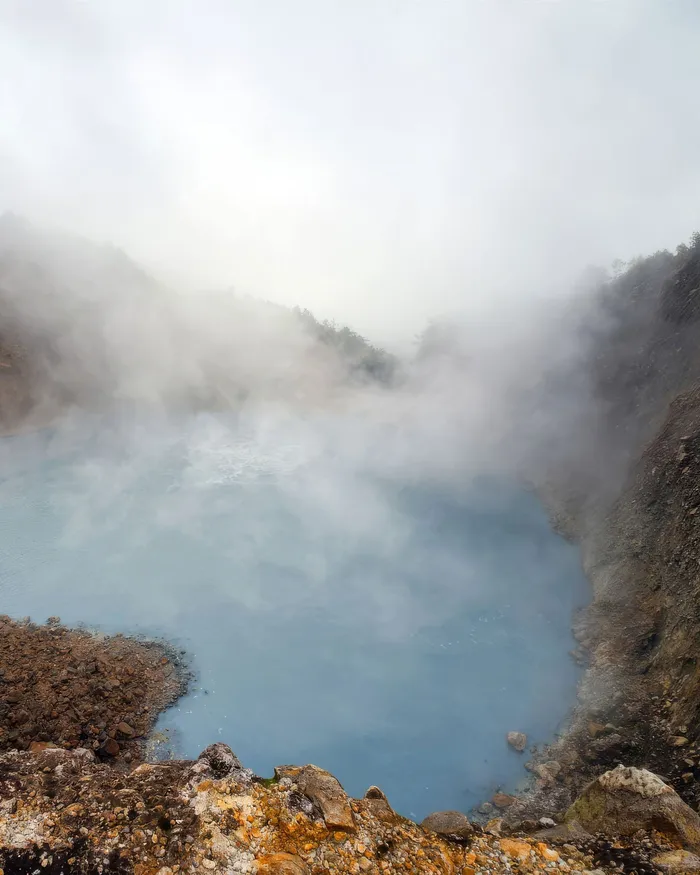
Imagine looking into a steaming crater with grey blue water bubbling wildly in the middle. The Boiling Lake in Dominica is the second largest boiling body of water on earth and without a doubt the most spectacular sight the “Nature Island” has to offer. But the way there is not a gentle stroll or an ordinary hike. It is a real challenge and a mud battle.
I had a lot of respect for the Boiling Lake hike, because many recordings in hiking apps showed around 1,000 metres of elevation gain (my watch showed almost double that in the end). When I actually did it and made it (after two days of non-stop rain), it turned out to be one of the most beautiful and challenging adventures of my life. We climbed, slid, pulled ourselves up and down on ropes and waded through rivers that were higher than usual. Sometimes the water was ice cold, sometimes warm.
If you are fit and want to experience hiking in Dominica from its wildest side, you are in the right place. But this is nothing for beginners. You should be sure-footed and have no fear of heights.
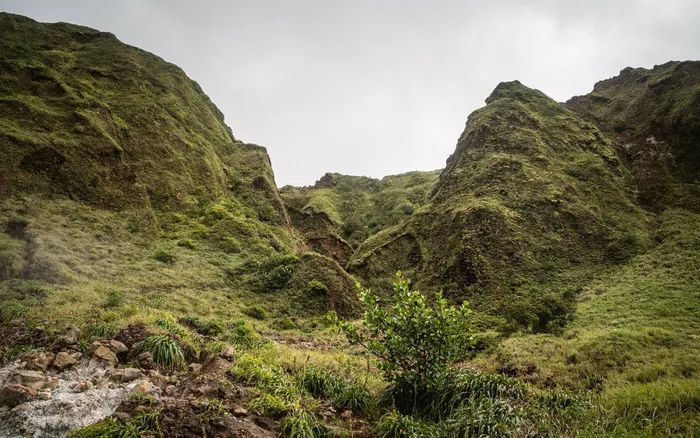
My highlights in pictures
Facts about the hike
Before we get into the details of the trail, here are the bare numbers of my hike. Don’t let the distance fool you. In Dominica every kilometre counts double, especially when the ground under your feet is muddy and steep.
Here is my data (tracked with my Garmin fenix 7s):
- Distance: 11.23 kilometres
- Elevation: 939 metres of pure ascent (because of the constant up and down, your legs end up with a load of almost 2,000 metres in total).
- Time: 7:34 hours. (In normal conditions fast hikers manage it in about 6 hours, but the extreme mud and the risk of slipping made us much slower.) Plan at least 8 hours.
- Calories burned: huge (more than 2,000).
- Difficulty: hard. It’s not only about fitness. It’s about being sure-footed, having a head for heights and endurance. The trail leads through dense rainforest, over narrow, windy ridges and down into the sulphurous Valley of Desolation. In some sections you have to climb almost vertically. If you have knee problems or a fear of heights, you should skip this hike. For everyone else it is the ultimate challenge that you will never forget.
Important updates: guide requirement and costs
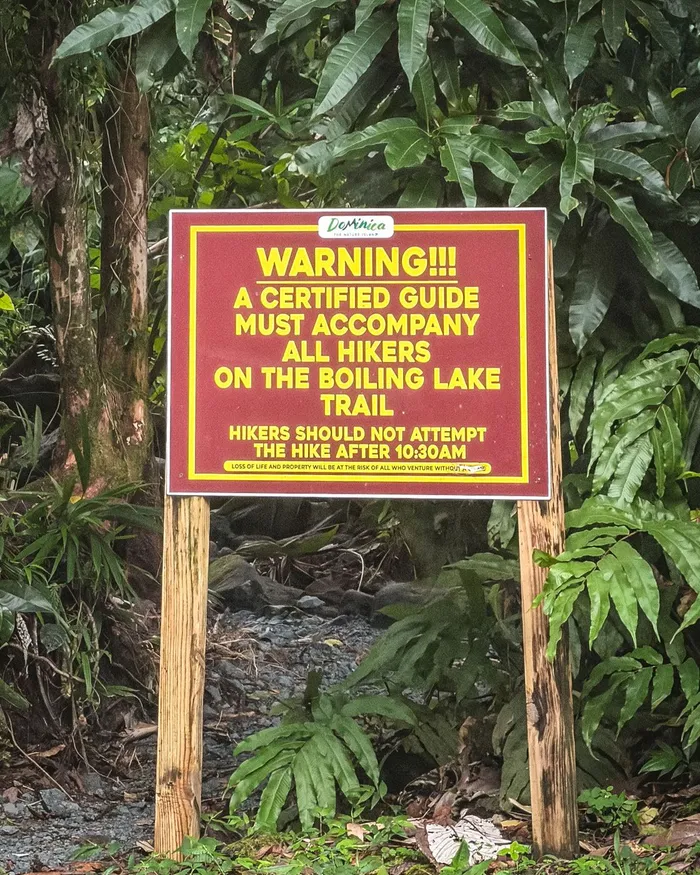
Since 2025 you can’t do this hike on your own anymore: a guide is officially required. This isn’t just a money maker, it’s a necessary safety measure. Tropical storms and landslides change the trails all the time. Without a guide we wouldn’t have known where to go from the Valley of Desolation at the latest.
Don’t use GPS tracks, because the path keeps changing as it gets washed away again and again. On our hike a large part of the original trail was missing, so we had to walk below the river and later climb back up to the original trail on a rope, almost vertically.
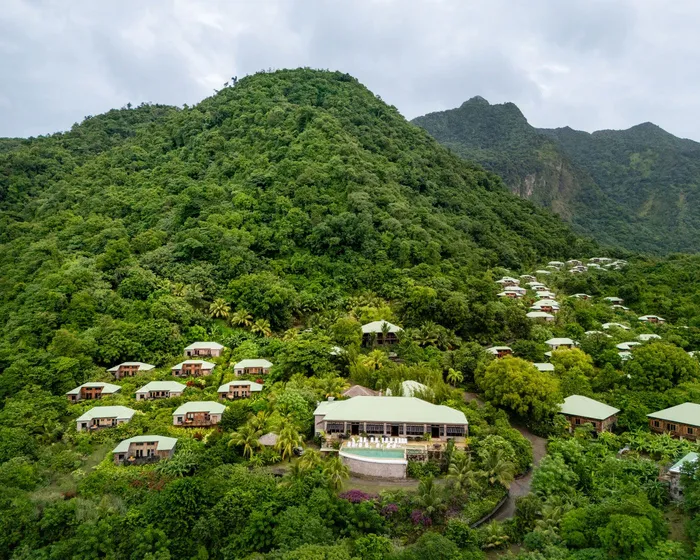
- Costs: We paid 120 USD for our private guide through the Jungle Bay Lodge. Some accommodations organise the hike for 100 USD. The national park fee is included. If you have a weekly pass, tell your guide so that he doesn’t pay twice.
- Why the guide was essential: After the rainy season part of the path had been washed away. Our guide knew the detours and the safe stepping stones across the rivers, which carried a lot more water than usual. Without him, finding the way from the steaming Valley of Desolation onwards would have been difficult.
- Booking: It’s best to book your guide directly through your accommodation or in advance online with certified local providers (for example guides certified for the Waitukubuli Trail).
Map of the hike
Best months and weather
- Dry season (about January to May): Your chances of fairly firm ground are better, but expect wet and muddy sections in the rainforest at any time. In return it gets really hot, and hikes often turn into a battle against the heat.
- Rainy season (June to November): Be careful now. Rivers can quickly become impassable (flash floods). If the rain is too heavy, responsible guides cancel the hike.
Dominica is called the “Nature Island” because of its lush rainforest, and that rainforest needs water. On this hike the weather decides everything. We started after it had rained for two days straight.
The result: endless mud. In many places the ground was deep, muddy and extremely slippery. That slows you down massively and costs a lot of strength, because you have to watch every step so you don’t slip. But somehow it also adds to the fun. The rivers were also higher than usual.
Until we reached Titou Gorge (where the hike starts) it wasn’t clear whether we could really set off because of all the rain. In the end everything worked out and the weather couldn’t have been better: cloudy, not too hot and no rain.
My tip: Start as early as possible (between 6 and 7 am). First, you avoid the worst of the midday heat, which later builds up in the treeless valley and makes you sweat buckets. Second, your chances of seeing the Boiling Lake without a thick wall of fog are much higher in the early morning. Nothing is more frustrating than standing in front of a grey soup after 4 hours of hard work.
Because the Jungle Bay Lodge cares a lot about guests having their breakfast, we only started shortly before 9 am. If there hadn’t been clouds in the sky, that could have been fatal. Even so, I was sweating non-stop.
The hike in detail: from Titou Gorge to the boiling lake
Start at Titou Gorge and Breakfast River
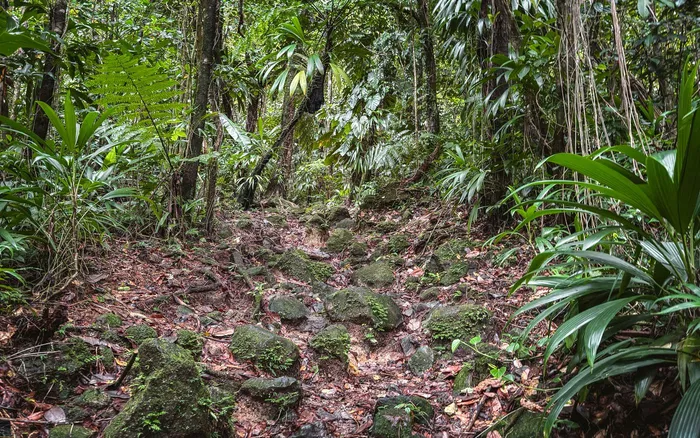
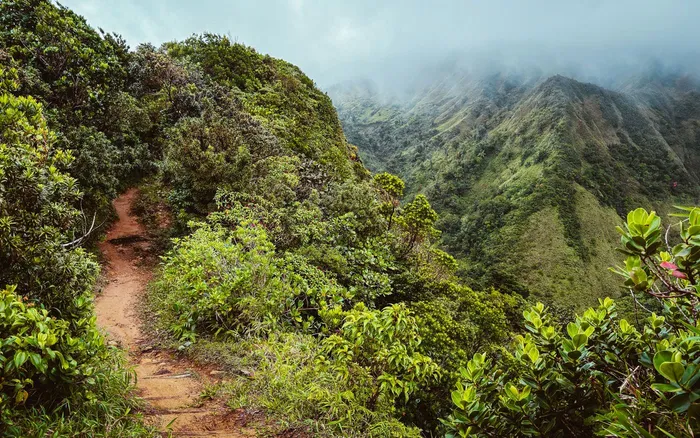
The hike starts at Titou Gorge, also known as a filming location for “Pirates of the Caribbean”. Here the trail still looks deceptively harmless. At first the path leads through dense, green rainforest on a well kept, maintained trail over wooden planks. It’s still muddy, though, and you have to watch out for the wet, slippery roots. In some places you can’t avoid them.
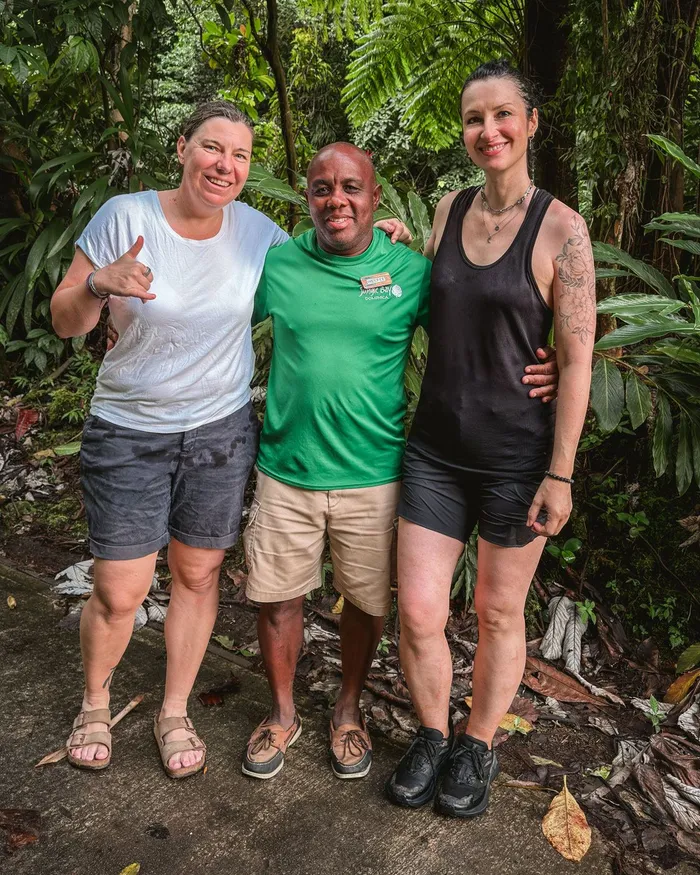
Our guide Weefee stopped several times to show us plants and trees in the rainforest and explain what they are used for. We heard the national bird, the very rare Sisserou parrot, calling, but sadly we didn’t see it.
After about 45 minutes we reach the Breakfast River. The first real river crossing. After days of rain the water level has risen considerably. The water rushes past us, loud and brown.
Here you see right away why the guide is required: he leads us safely through the current over slippery stones. In some places we wade knee deep through the water. From now on our shoes are wet anyway, so it doesn’t matter.
Note: shoes without Gore-Tex are an advantage, because the water runs in from the top, but with Gore-Tex it hardly runs out again. The shoes stay heavier and start to smell at the end of the hike (the next day at the latest). My travel companion wore some, and I can tell you the smell wasn’t pleasant.
The climb to Morne Nicholls
After the river crossing the real fight against gravity begins. From now on it goes steeply uphill towards Morne Nicholls. The path here often consists of wooden steps set into the ground or tangles of roots and is actually really good. Because of the rain every step is slippery. In some places roots serve as natural ladders. I really enjoy the climbing.
The climb demands everything: your pulse races, and with humidity of almost 100% the sweat pours down. But the effort pays off. At the top of Morne Nicholls the view opens up: “The View of Redemption”.
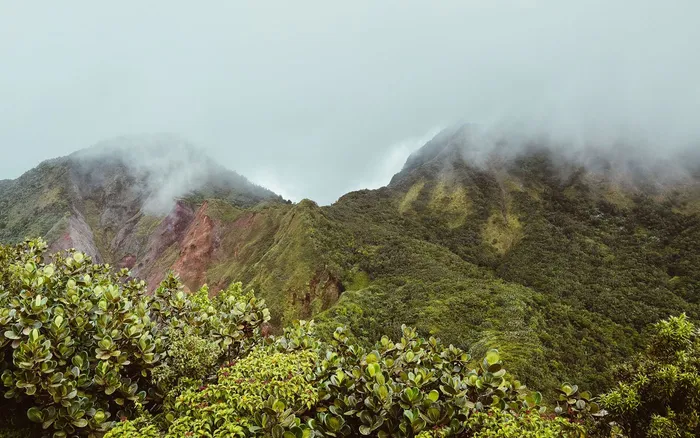
From here we see our destination and the rest of the trail for the first time. In front of us lies the steaming Valley of Desolation, and in the distance the sulphur clouds of the Boiling Lake rise into the sky. We are surrounded by a landscape shaped by volcanoes, the kind that fascinates me again and again all over the world. A stunningly beautiful sight that makes you forget your burning legs for a moment. We use the moment to catch our breath, eat snacks (bananas and nuts) and drink some water. We gather strength for what comes next: the descent into the volcanic crater.
Descent into the Valley of Desolation
The descent from Morne Nicholls is like stepping into another world. We slide down a waterfall on our bottoms. It’s huge fun, and I’m wet anyway (and muddy too). Within a few minutes the scenery changes from lush, green rainforest to a barren, volcanic moonscape: the Valley of Desolation.
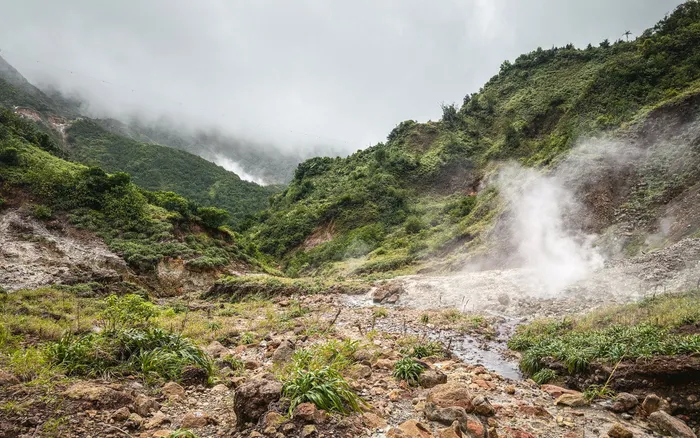
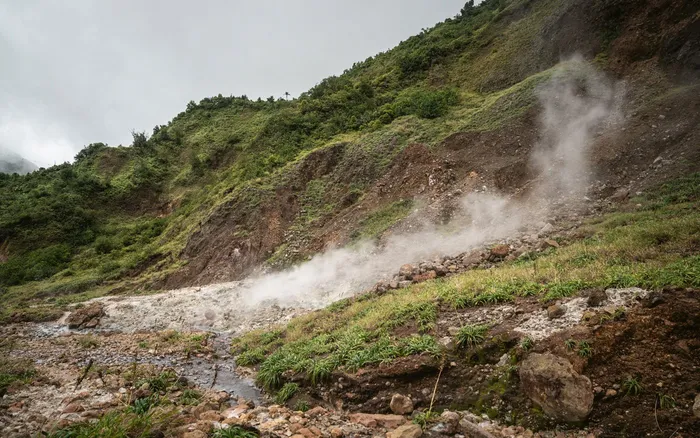
You can smell the sulphur in the air from far away. Everywhere the earth hisses and steams. Down here you feel Dominica’s volcanic activity up close. Milky blue streams of hot water (some of them boiling!) flow through the valley, grey mud bubbles in small holes in the ground and fumaroles release hot gases. Look out for bright green moss. It already fascinated me on the Laugavegur Trail in Iceland. This is my favourite place on the whole hike. We leave eggs in the boiling water, which we will eat during a break on the way back.
After the rain of the previous days the contrasts were even more extreme: the dark, wet rock, the white clouds of steam and the yellow and orange sulphur deposits created an almost unreal picture.
Watch out: Here your guide is your life insurance. In some places the earth’s crust is paper thin. One wrong step and you break through into boiling hot mud. Our guide knew the best way through.
The destination: the Boiling Lake
We now climb over wet rocks and cross several streams that are so warm they briefly warm up our wet feet. A strange but lovely feeling.
After the valley comes the last steep climb to the crater rim. First we have to pull ourselves up on a rope, then more steps lead upwards. In places the wind blows really hard. And then suddenly we are standing in front of it: the Boiling Lake.
The sight is breathtaking. A basin about 60 metres across, filled with grey blue water that boils and bubbles wildly in the middle. The lake is heated by a fumarole below the surface. The steam rises in thick clouds, and the wind plays with us: sometimes the view was completely blocked, then the curtain tears open for a few seconds and reveals the raging water. If you want to take photos, you need patience and quick reflexes.
We looked for a halfway dry spot (not easy at all!) for our lunch break, because it starts to drizzle. It is a sublime feeling to sit there, eat a sandwich and watch the forces of nature. My Garmin watch (see it here) already shows more than 1,000 metres of elevation gain at this point.
The way back: why going down isn’t easier
Many people think: “Great, I’ve reached the goal, now I just have to go back.” Wrong. For many hikers the way back from the Boiling Lake is mentally and physically almost harder than the way there. A lot of strength is used up, mine too. The climbs and the partly high steps become torture. From here on it’s all about willpower and mental strength (I know that from climbing Kilimanjaro).
You have to climb back up everything you came down, including the steep climb out of the Valley of Desolation back to Morne Nicholls. Your legs are tired, your concentration fades, but the mud is still there. Going uphill, one spot turns into the ultimate mud slide. Hiking poles are worth their weight in gold here to keep your balance and take the load off your knees on the high steps.
With poles, the last long descent on the well built path is child’s play.
When we arrive back at Titou Gorge after more than 7.5 hours, we are soaked through, covered in mud from head to toe and absolutely happy. We jump into Titou Gorge with all our clothes and shoes on. A great end to this hike.
If you are fit and up for a real adventure, you should definitely take on the Boiling Lake hike.
By the way, a cable car up to the lake is currently being built. To be honest, I have mixed feelings about it. It will allow most people to see the beauty of the Boiling Lake, but the impact on nature is immense.
Packing list and preparation
Being sure-footed and a basic level of fitness are important, so plan the whole day for this hike. This is what I carried or wore on the hike:
- Shoes with good grip: Whether you go for trail runners or hiking boots is a matter of taste. I prefer trail runners because they are lighter when they get wet. Your shoes should be allowed to get wet and muddy.
- Pro tip: Forget waterproof membranes like Gore-Tex. The water runs in from the top when you cross rivers anyway. What matters is that it runs out again and the shoe doesn’t stay heavy forever.
- Hiking poles (a must!): Without poles I would have been lost in the deep mud and on the steep steps. They are worth their weight in gold, give you balance when the ground slips away under you and take the load off your knees on the hard descent. Some of the “steps” are very high.
- Dry bag and rain protection: A rain jacket or poncho, as the weather changes quickly and some spots are very windy. Pack your camera and electronics in a dry bag. A rain cover for your backpack is a must too.
- Clothing: Technical clothing: quick drying is the magic word here. Cotton soaks up water, gets heavy and chafes. You can pack swimwear. After the hike we jumped into Titou Gorge fully dressed, shoes and all.
- Food and water: At least 2 to 3 litres of water (ideally in a hydration bladder so your hands stay free). A packed lunch and snacks like nuts, bananas and bars. You burn about 2,000 calories, so you need plenty of fuel.
- Sun protection: Even when it’s cloudy, the Caribbean sun is extremely strong, especially in the shadeless Valley of Desolation. Don’t forget a hat and sunscreen.
- First aid kit: blister plasters. Because your socks are permanently wet, your shoes rub faster than usual (I was lucky and didn’t get any blisters).
- Rain or wind jacket: On the ridge and from the Valley of Desolation up to the Boiling Lake it can be very windy and cooler.
Useful links: our recommendations, this is where we book
If you book your trips or gear through my links, I receive a small commission. That way you help me finance this travel blog (technology and hosting). Thank you for your support and for being part of my community. Thank you so much for your support!
Disclosure: A big thank you to Discover Dominica for inviting me on this research trip. My editorial freedom and opinion remain my own.