Golden Circle at a glance
- The Golden Circle (Icelandic: Gullni hringurinn) is a loop of around 300 km in southwest Iceland
- The 3 main stops: Þingvellir National Park, the Geysir geothermal area and Gullfoss waterfall
- Easy to do as a day trip from Reykjavík, about 45 minutes to the first stop
- If you start straight from Keflavík Airport, you can easily fit the Golden Circle into your arrival day: Route 35 takes you to the first stops without a detour through the capital
- The roads are well built and signposted, you don’t need a 4x4 (except in winter)
- Driving yourself is worth it: you set the pace and decide where to stop and for how long
- Recommended time: at least 6 to 8 hours, a full day is better
The route: these are the stops on the Golden Circle
The classic route takes you around 300 kilometres through southwest Iceland, mostly along Routes 35 and 36. The three main stops, Þingvellir, Geysir and Gullfoss, are well signposted and easy to drive in one day. If you have more time, you’ll find plenty of other stops between the highlights that are worth it.
Golden Circle route map
Golden Circle map in Google Maps
My Golden Circle map with all the highlights, campsites and hidden gems is available in my shop. That way you have every stop at a glance, even offline.
Aus meinem Shop
Island-Karte: 400+ Orte für Google Maps
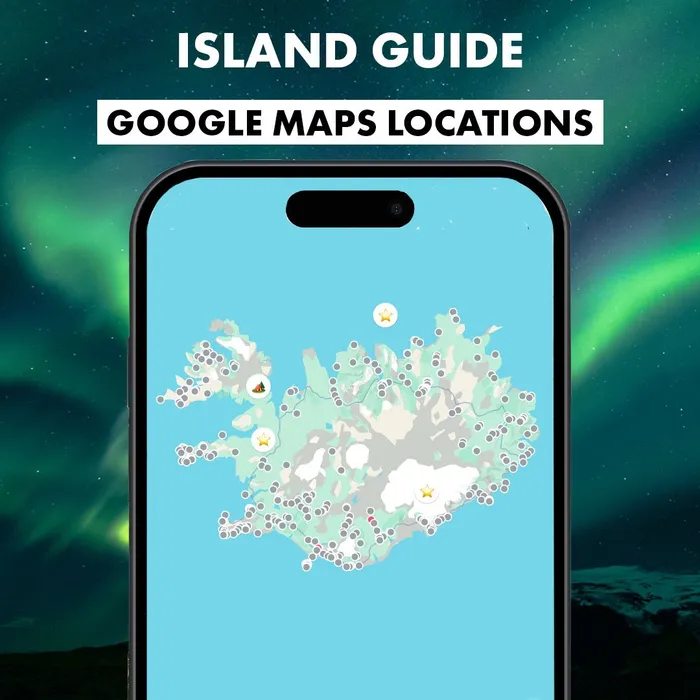
Ich war mehrfach in Island und habe alle Lieblingsorte und Geheimtipps in eine Google Maps Karte gepackt, direkt nutzbar auf deinem Handy.
- Sehenswürdigkeiten und alle Wasserfälle als eigene Karte
- Lieblingscafés und Restaurants
- Camping- und Stellplätze für Zelt und Wohnmobil
- Kostenlose Updates, lebenslanger Zugriff
Þingvellir National Park
For me, Þingvellir is the Golden Circle stop with the most to tell, even if at first glance it looks less spectacular than Geysir or Gullfoss. Here you can walk between two continental plates: the Eurasian and the North American tectonic plate visibly drift apart at this spot, by around 2 cm a year. The result is deep rock fissures, young lava fields and a landscape that is still changing.
Þingvellir has been a national park since 1930 and a UNESCO World Heritage Site since 2004. From the visitor centre at the top of the viewpoint you first get the best overview of the fissures, the plain and the lake Þingvallavatn. Footpaths lead down from there.
Note: Road 435 is closed in winter and, depending on snow, only open from May to September.
 Walking between the Eurasian and the North American tectonic plates in Iceland
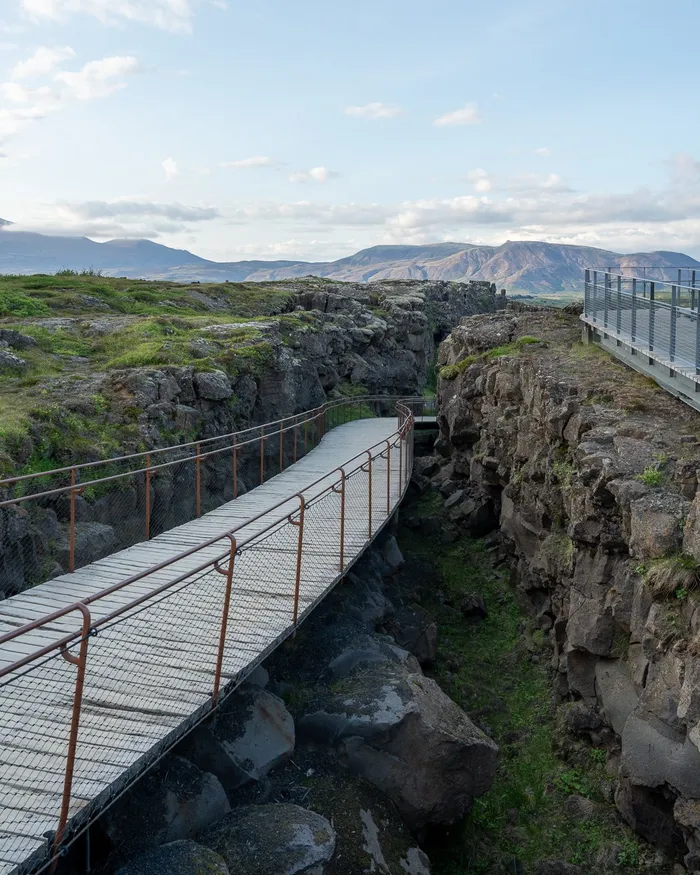
 Þingvellir in winter, also beautiful with the white mountains in the background
 Þingvellir in summer, everything is green
From here, footpaths lead down into the fissures between the continental plates and past Öxarárfoss waterfall.
Öxarárfoss
Öxarárfoss is where the river Öxará drops over the edge of the Almannagjá gorge. A short but lovely stop. It’s about a 15 to 20 minute walk from the visitor centre, and the path is easy.
It can get icy in winter: microspikes are a good idea in Iceland anyway and belong on your packing list for Iceland.
 Öxarárfoss waterfall
Snorkelling in the Silfra fissure
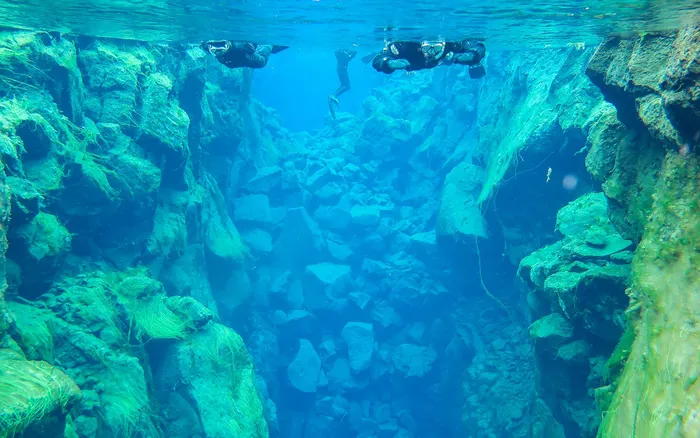
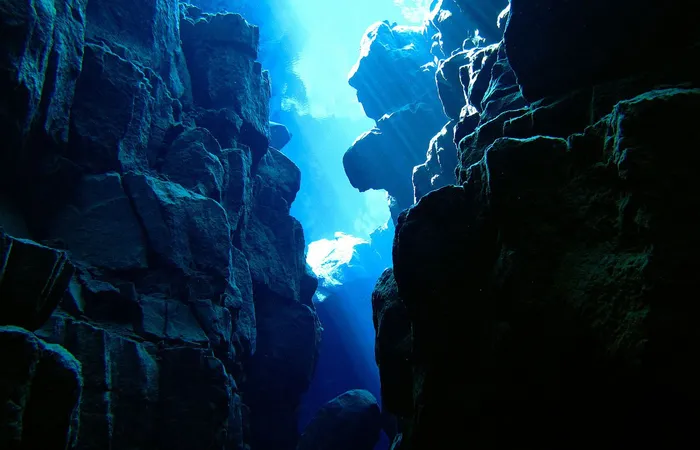
Silfra is one of those places I kept talking about long after surfacing. The fissure between the continental plates opened after an earthquake in 1789 and fills with meltwater from the Langjökull glacier. The water takes up to 100 years to filter 50 kilometres through lava rock. The result: the purest natural fresh water in the world, with visibility of over 100 metres.
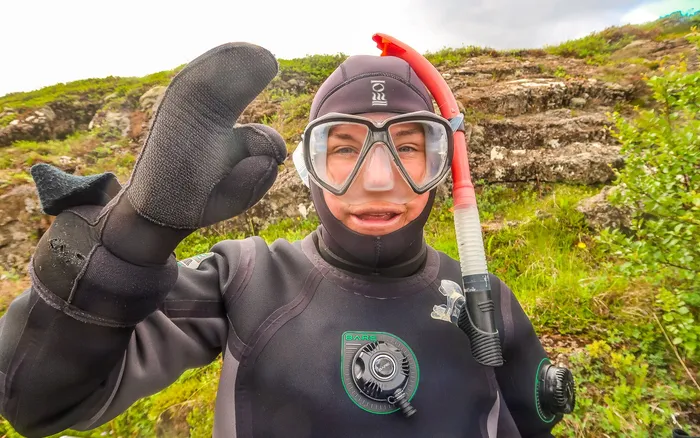
I went snorkelling here and was amazed by how clear it was. One of the most impressive things I’ve done in Iceland.
Please check prices directly with Dive.is (on my last visit: from €135).
- Provider: Dive.is runs snorkelling and diving tours, also with transfer from Reykjavík
- Allow at least 3 hours: getting into the gear and the briefing take time
Alþingi, the oldest parliament in the world
The Alþingi was founded on the plain of Þingvellir in 930 AD as an open-air assembly, and only moved to Reykjavík in 1844. Today you’ll find the small church Þingvallakirkja here and the prime minister’s summer residence. A short walk that rounds off your visit.
Note: Road 435 is closed in winter and, depending on snow conditions, only open from May to September. So check the conditions before you drive it.
 One of the oldest churches in Iceland
 The Alþingi, Iceland’s national parliament
Brúarfoss
Brúarfoss was a hidden gem for a long time. Today it’s well known, but still less crowded than the big three. What makes it special: the water glows an intense, almost unreal blue and flows through lots of small cascades into a narrow gorge.
How to get there: Google Maps sends you the wrong way here. Look out for the sign by the road pointing to the car park. The last stretch is a gravel track, then it’s about a 5 minute walk to the bridge over the river Vallá. Parking costs money (pay with the parka.is app) and spaces are limited. Early in the morning or in the evening it’s much more relaxed.
 Brúarfoss on the Golden Circle in Iceland
Haukadalur geothermal area & Geysir
The Haukadalur geothermal area smells, hisses and bubbles, all in a very small space. The Great Geysir, which gave all geysers worldwide their name, has barely been active for years. Its neighbour Strokkur, on the other hand, reliably shoots a fountain into the air every 8 to 10 minutes. The height has dropped in recent years, from once 35 metres to around 16 today, but the show is still impressive. Some people jump when it suddenly goes off.
Besides the geysers, there are lots of bubbling mud pots and hot springs. Take your time and walk around the whole area.
Best time of day: before 10 am or after 8 pm (in summer), before or after the tour buses. In summer you have daylight until midnight, so make the most of it.
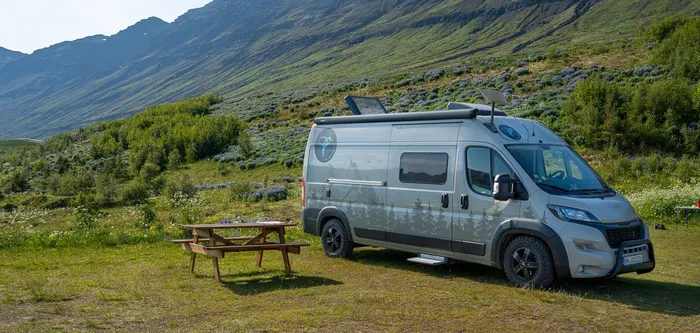
Tip for campers: Camping Geysir is right next to the geothermal area. Electricity, showers and a washing machine are available. The owner is very friendly and happy to share a few tips.
- Electricity, showers and washing machines with dryers are available (at extra cost).
 Strokkur geyser
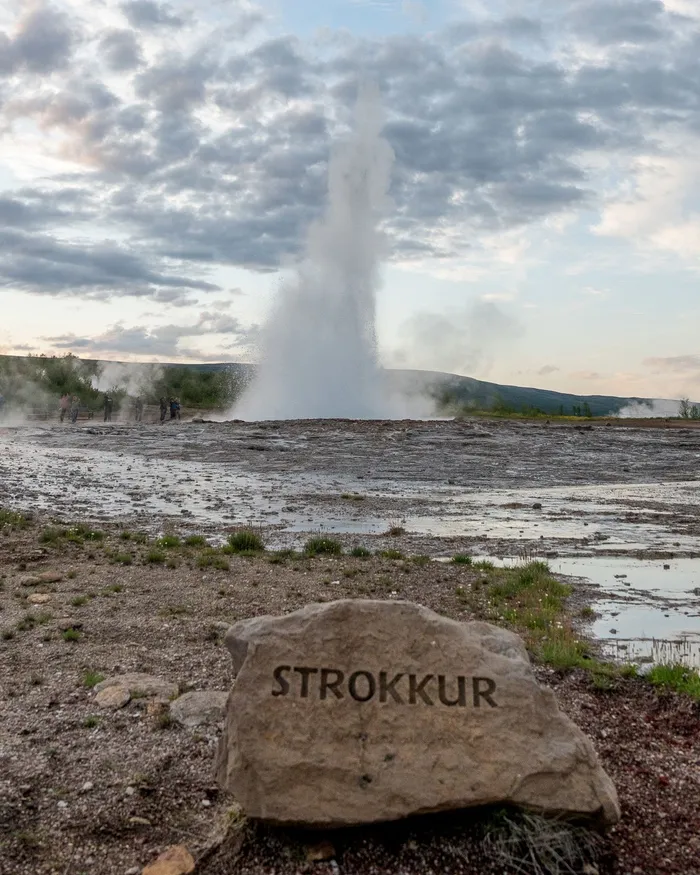
 Strokkur geyser in the Haukadalur geothermal area
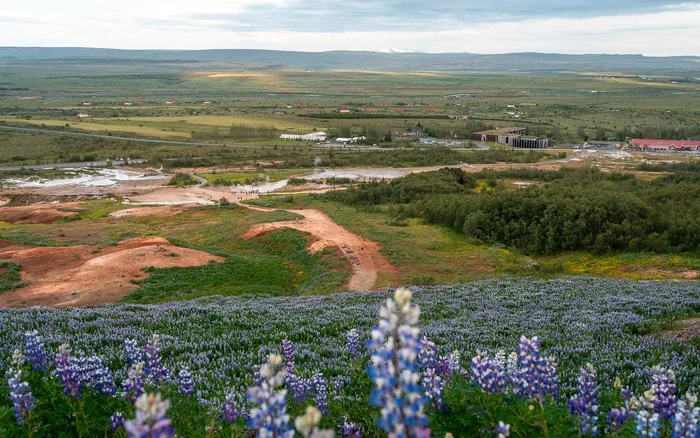
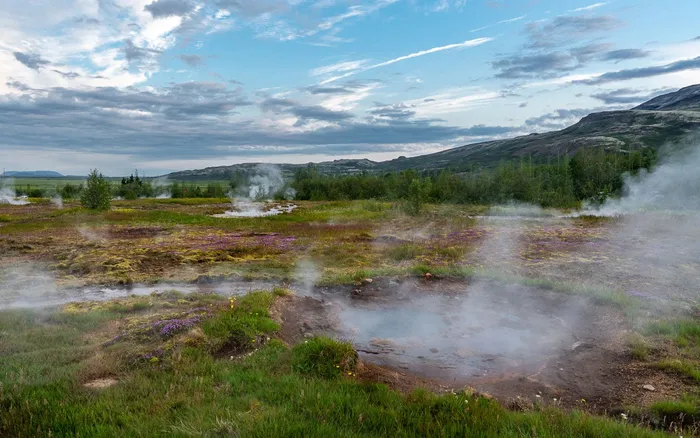
Gullfoss
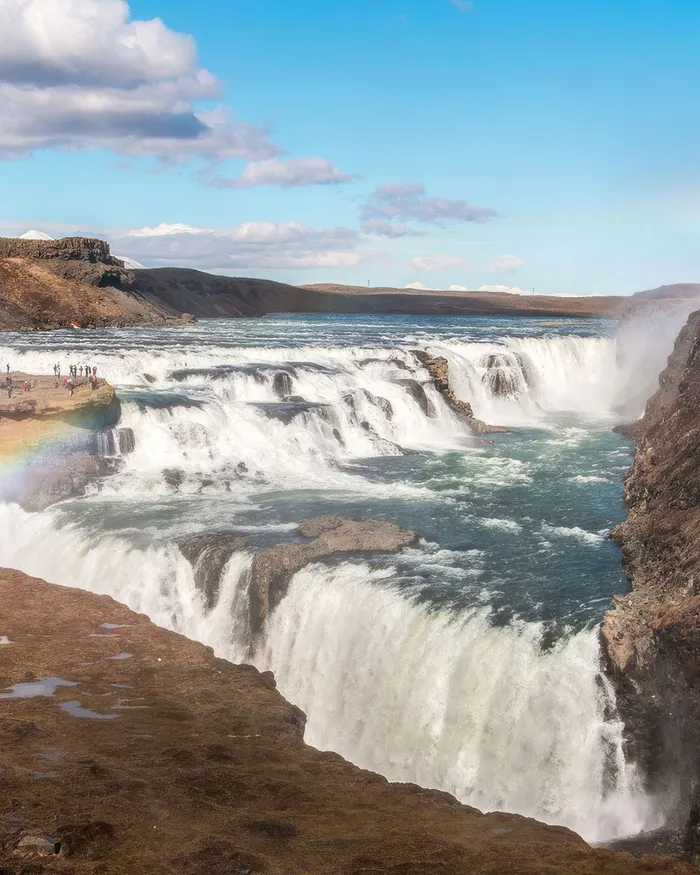
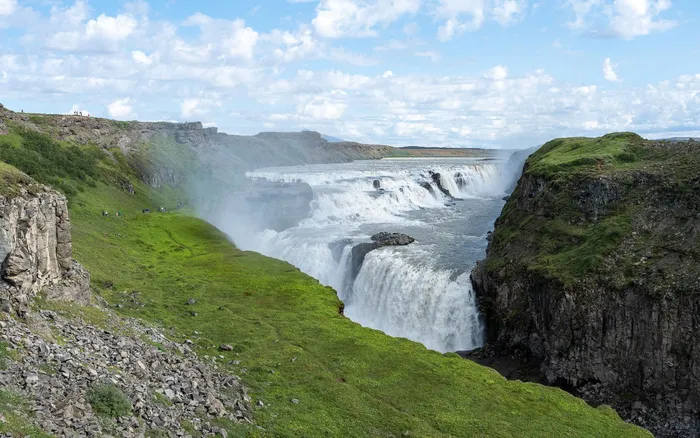
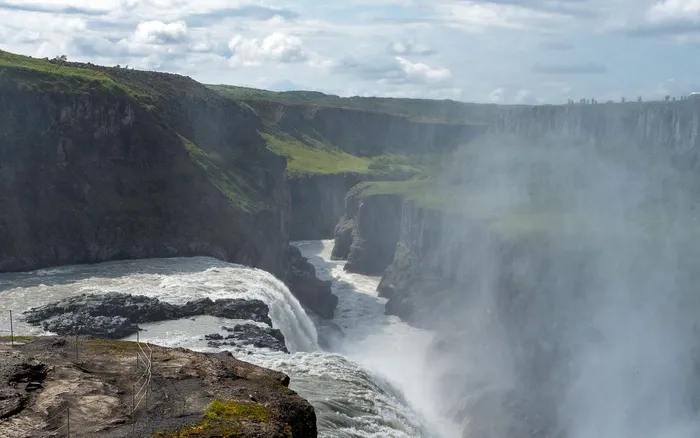
Gullfoss is loud, wet and impressive, one of the most beautiful waterfalls I’ve seen in Iceland. The river Hvítá plunges around 30 metres in two tiers. Put your rain jacket on before you walk down, you’ll need it. The name means “golden waterfall”, after the rainbow that forms over the gorge when the sun is out.
At Gullfoss there’s a large visitor centre with a restaurant, souvenir shop and free toilets. Entry and parking are free.
In winter the paths to the viewpoints are often closed because ice makes them too dangerous.
Gullfoss in summer vs. winter
Both have their charm: in summer green hills, rainbows and full power. In winter ice formations, silence and an almost unreal setting. I’ve visited Gullfoss in both seasons, and neither visit was better than the other.
Take a look at the photos of Gullfoss in summer and winter below. Both are truly beautiful.
Gullfoss in summer
Gullfoss in winter
 Gullfoss waterfall, Iceland
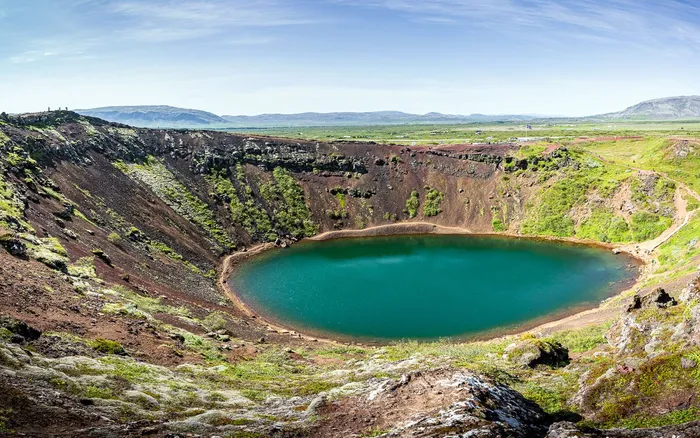
Kerið crater lake
Kerið is right by the road and quickly done, but worth it. In a few minutes you can walk around the rim of the volcanic crater and look down on the deep blue lake.
- Free parking, entry 400 ISK per person (children up to 12 free)
- Drones are not allowed
- My tip: in winter with snow the stop is less worth it because the colours are missing. If you’re short on time, pick a different stop.
More highlights along the route
If you have more than one day, you’ll find a number of other places along the Golden Circle. Not all of them impressed us equally, so here’s my honest take on what we tried ourselves.
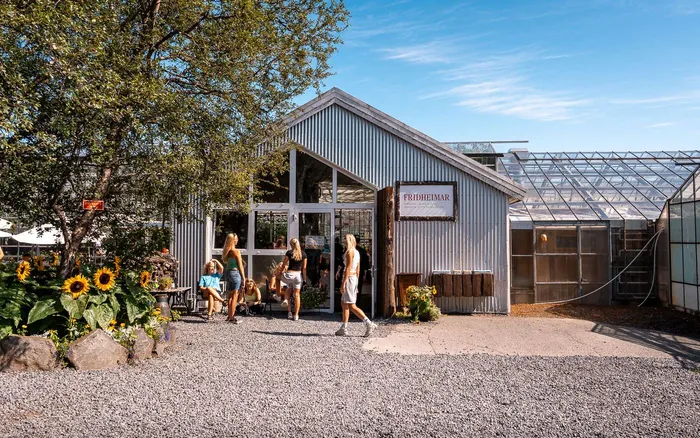
Friðheimar tomato farm
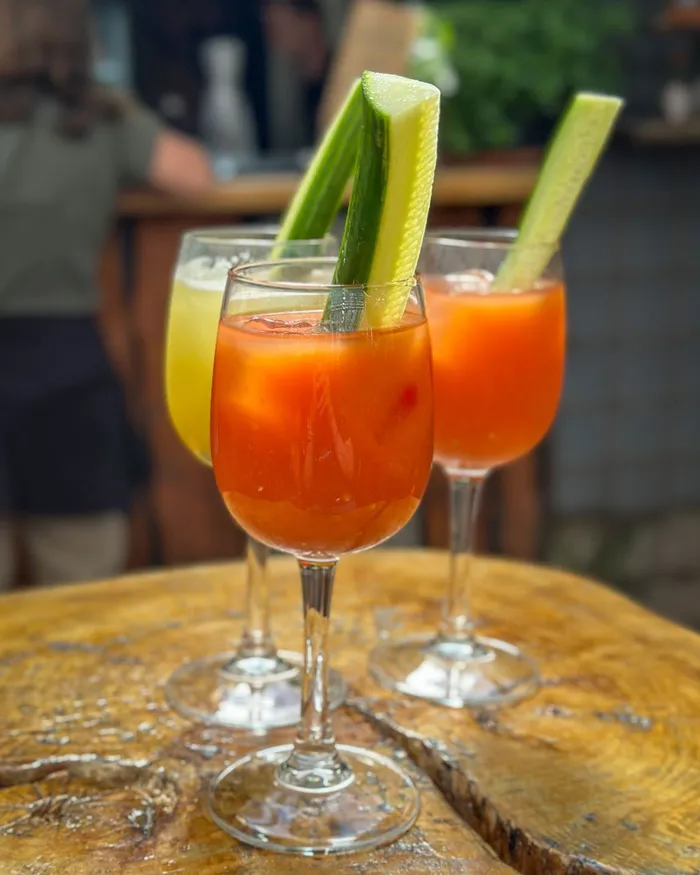
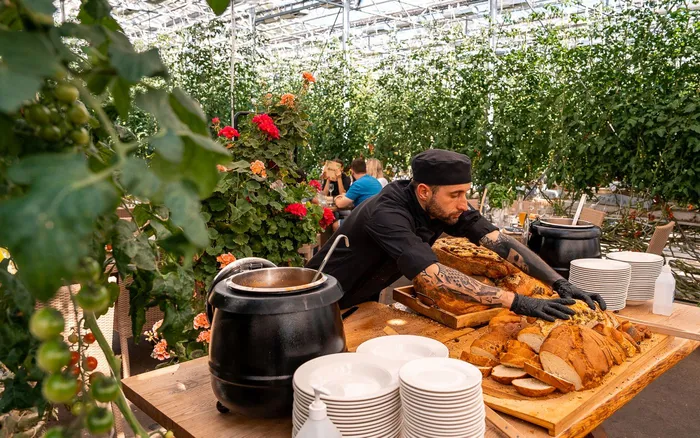
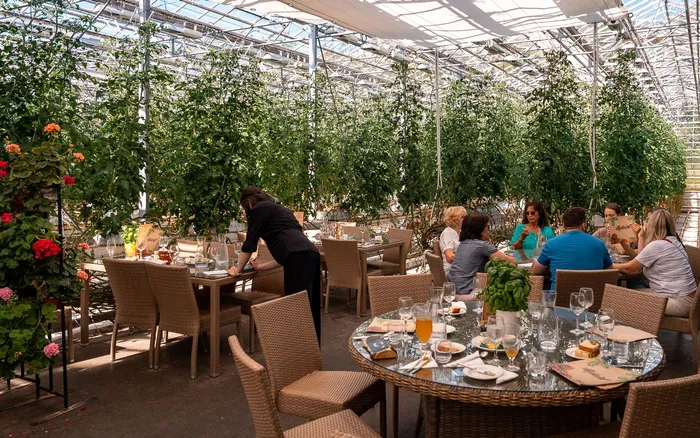
Friðheimar used to be an insider tip, today the tour buses stop here. Friðheimar serves tomato dishes and drinks in every shape and form. In summer we didn’t get a table: too full, too many groups. At the bar we tried a Bloody Mary (there’s also an alcohol-free one), and both versions were delicious. We didn’t manage to eat (no table), but it sounds good: farm-to-table tomato dishes, home-baked bread and soups.
- Restaurant opening hours: lunch only, 12 to 4 pm
- In summer, be sure to book a table well in advance
- Coming in the evening? The partner restaurant Vínstofa Friðheima offers happy hour and dinner
We couldn’t get a seat without a reservation in summer. If you want to eat here, you’d better book weeks ahead.
Sólheimar eco-village
Sólheimar, “home of the sun”, lies in the Grímsnes area, a little off the main route, and is considered the oldest eco-village in the world. It was founded in 1930 by Sesselja Hreindís Sigmundsdóttir as a children’s home. Today people with and without disabilities live and work here together: in the organic greenhouse, in forestry and in six art workshops.
For a break, the organic café Græna kannan (“the green jug”) in the middle of the village is a good choice. They serve coffee from their own roastery, tomato soup from the greenhouse, cakes and waffles. Next door at the Vala shop you can buy crafts, candles and vegetables from Sólheimar.
Hrunalaug hot spring & Secret Lagoon
We can recommend Hrunalaug: a small pool, a turf-roofed hut and water at around 40°C. Early in the morning or in the evening it’s still pleasantly quiet. Payment is cash only at the car park (1,000 ISK / approx. €10). Bring your own towel, and watch out, the bottom is slippery from algae.
The Secret Lagoon is the oldest swimming pool in Iceland, and it stopped being a secret a long time ago. It draws lots of visitors even in winter, there’s pretty much always something going on. It’s not idyllic, but the water is warm and reliable. For a relaxed soak away from the crowds I’d rather choose Hrunalaug. But if you specifically want to see the historic pool, this is the place.
- Entry around €15
 Hrunalaug hot spring on the Golden Circle, Iceland
Laugarvatn Fontana
A clear recommendation: Fontana spa has two outdoor pools, a hot tub with a lake view, a steam bath and a sauna, and you can jump straight into lake Laugarvatn. We joined the rye bread tour and found it surprisingly interesting: the bread is baked in the ground using geothermal heat. Short, but memorable.
- Children under 12 go free, towels and swimsuits can be rented
 Photo: Laugarvatn Fontana
Reykjadalur hot spring thermal river in Hveragerði
Hveragerði isn’t just a handy place to stay. We think the town is worth its own stop for its geothermal activity. We stayed at the Greenhouse Hotel here, stocked up at the supermarket, got supplies for the day at the bakery and filled up the car. You’ll find everything you need here.
The most popular highlight is the hike to the hot river, the Reykjadalur hot spring thermal river. You can do it all year round, but in summer it gets very busy (start early). You hike around 3 km through the lush green hills of Reykjadalur, past bubbling holes in the ground and babbling streams.
Allow 45 to 60 minutes each way. Once you reach the river, it’s time to get in. In several places the hot spring water collects in natural pools at around 38°C.
You’ll find info on the Greenhouse Hotel further down in this guide.
 Reykjadalur hot spring thermal river in Hveragerði
Brúarhlöð
The canyon on the river with (usually) very green water. It’s especially impressive in winter, when the surrounding rocks are covered in snow. You’ll rarely meet people here. There’s a small car park and no official path. Be careful if you want to climb down to the water.
Kayak tours end here. We found it not very spectacular and had hoped for more. Maybe that was because it hadn’t rained much that summer. Not a must, but if you’re nearby and have time, you can take a quick look.
 Brúarhlöð
Faxifoss
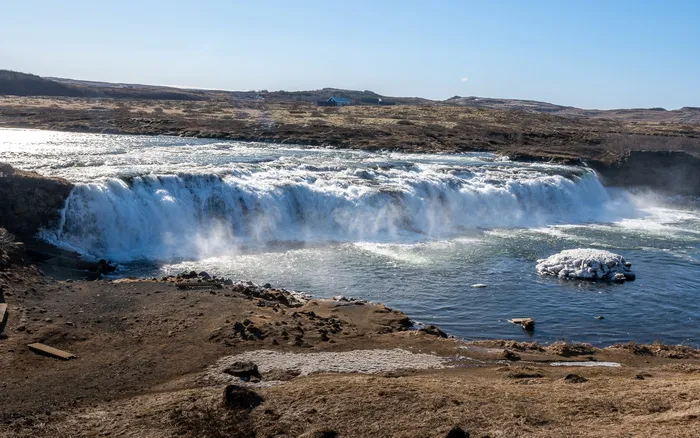
Faxifoss delivers what it promises: a beautiful waterfall without the crowds at Gullfoss. Hardly any tour buses, hardly any visitors. It isn’t big or dramatic, but if you need a short break from the crowds, it’s exactly the right stop.
Planning your trip: tips for driving the Golden Circle yourself
How long does the Golden Circle take?
For the classic route with the three main stops, Þingvellir, Geysir and Gullfoss, you should allow at least 6 to 8 hours, including breaks and time to look around. That’s easy to do in one day.
I explored the Golden Circle in winter in one day. That works if you start early and prioritise your stops. In summer, with our camper, snorkelling in the Silfra fissure and other activities, we spent 3 days here. For a trip without stress and without feeling rushed, I recommend allowing 2 to 3 days. That gives you time for spontaneous stops, and you’re guaranteed to want them on this route.
Driving the Golden Circle: route & what you need to know
You can easily drive the Golden Circle in a rental car: the route is well built, signposted and easy to navigate even if you don’t know the area. Most travellers start in Reykjavík and drive the loop clockwise: first Þingvellir, then Geysir, then Gullfoss, and back via Selfoss. If you start straight from Keflavík Airport, you can also drive it the other way round and skip the detour through the capital.
Planning ahead pays off: depending on the season, rental cars get booked up quickly and the longer you wait, the pricier they get. The same goes for accommodation along the route.
2WD or 4x4: which car do you need?
For the Golden Circle itself, a normal 2WD small car is enough. Route 35 is paved and easy to drive. For solo travellers or couples a compact car is fine; for larger groups I’d recommend a van with enough luggage space, or two small cars.
If you also want to explore gravel roads or spots off the Ring Road besides the Golden Circle, a 4x4 is worth it. We almost always drive a 4x4 in Iceland, simply because we like to turn off spontaneously when something interesting comes up.
A hybrid sounds like a good idea, but it didn’t convince us: the tank is so small that you really have to plan so you don’t miss the next petrol station. The charging network for electric cars is growing, but in many places there are still only 1 or 2 chargers. Here too: plan ahead.
My recommendations for finding a rental car: Sunny Cars for comparing prices, ISAK or mycar for real 4x4s with off-road modifications.
Renting a car? Here's how I do it
I usually search on Discover Cars or Booking.com Cars and compare prices with Sunny Cars, my go-to for most countries.
Tips for booking a rental car Can you rent a car without a credit card?
Self-drive or guided tour?
My clear recommendation: drive yourself. You decide how long you stand at Geysir, when you move on and where you stop spontaneously. Especially in summer with its long days, that’s a real advantage: you can start early in the morning before the buses arrive, and go back again in the evening when the light at Gullfoss is perfect.
Guided tours have their place: if you don’t have a driving licence, they’re the easiest option. Some operators also combine the Golden Circle with activities like snowmobiling or northern lights hunting, which are easier to book that way. The catch: you only have limited time at each stop, the schedule is tight and you wait for the group.
If you can manage it, time-wise and with a driving licence, you’re better off on your own. I’d always want to travel Iceland independently.
Prefer an organised trip?
These tours on TourRadar combine the Golden Circle with other regions, as a self-drive package or guided in a small group.
-
Iceland · Self-drive
Golden Circle and South Coast in 5 days
Self-drive package with a rental car from Keflavík
from $1,236
5 days
View the tour
-
Iceland · Small group
Golden Circle, South Coast, Snæfellsnes and Reykjanes
Guided tour from Reykjavík, a lot of Iceland in a short time
from $1,384
5 days · up to 19 travellers
View the tour
-
Iceland · Small group
Best of Iceland in 9 days
Golden Circle, Snæfellsnes, the north and the glacier lagoon with a guide
from $4,599
9 days · up to 18 travellers
View the tour
Prices according to TourRadar, as of November 2026.
Best time to visit & weather on the Golden Circle
The Golden Circle is worth it all year round, but summer and winter are two completely different experiences.
June to early September is the classic travel season: milder temperatures, long days and rich colours. In summer you have daylight until midnight, which gives you a huge amount of flexibility. The downside: the main stops are busier. Starting early or driving in the evening helps.
In winter the route is quieter, the landscape is covered in snow and the light is often spectacular. In return you have to factor in a few limitations: Road 435 at Þingvellir may be closed depending on snow, the paths at Gullfoss can be closed because of ice, and Kerið crater lake loses much of its colour under snow. Microspikes for your shoes are a must in Iceland in winter anyway.
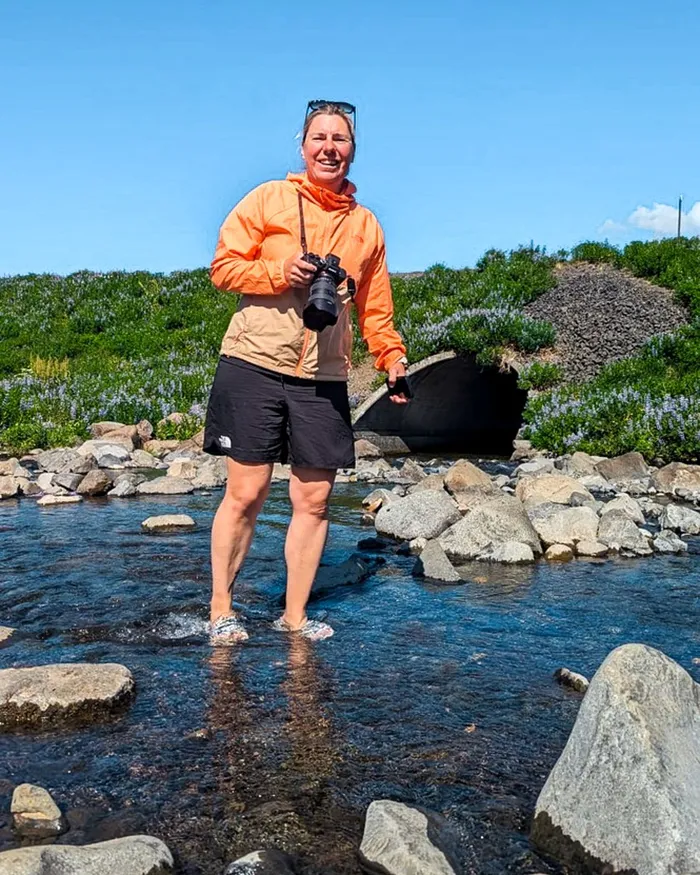
The weather in Iceland is unpredictable at any time of year. Waterproof clothing and warm layers are always the right call. Umbrellas are pretty useless in Icelandic wind, so a good rain jacket is the most important thing. Add waterproof shoes.
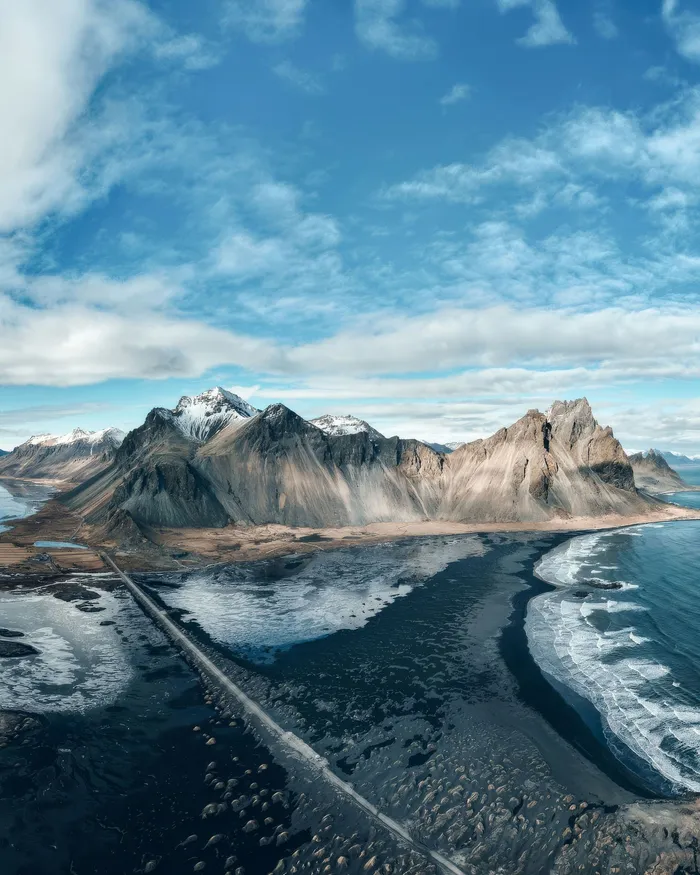
Weather and clothing
The weather in Iceland is unpredictable, so it’s important to be ready for all conditions and pack waterproof and warm clothes. Depending on the season, waterproof shoes and rain protection (a jacket or poncho; an umbrella is no use in strong wind) help keep you dry.
 It can rain in Iceland in any season
 For hikes in the Icelandic highlands you need a hat, gloves and a scarf even in summer.
Where to stay on the Golden Circle
For a day trip, the best places to stay are Reykjavík or Selfoss, both are well connected. If you’re planning more than one day, consider a night close to Geysir or Gullfoss. Accommodation there is scarce and not cheap, though. With a camper it’s much easier and more flexible, more on that below.
Hotels
The Greenhouse Hotel, Hveragerði
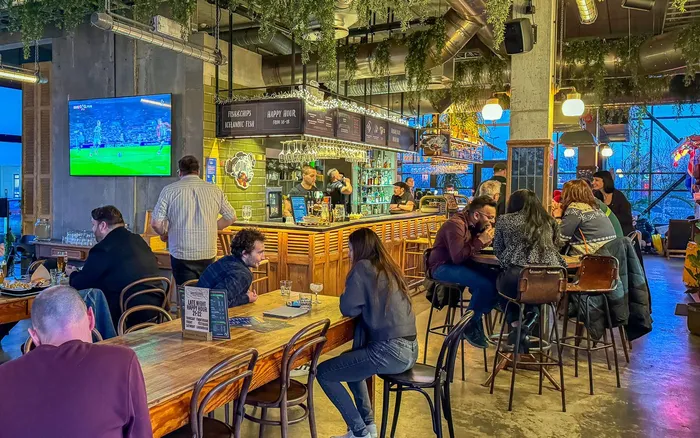
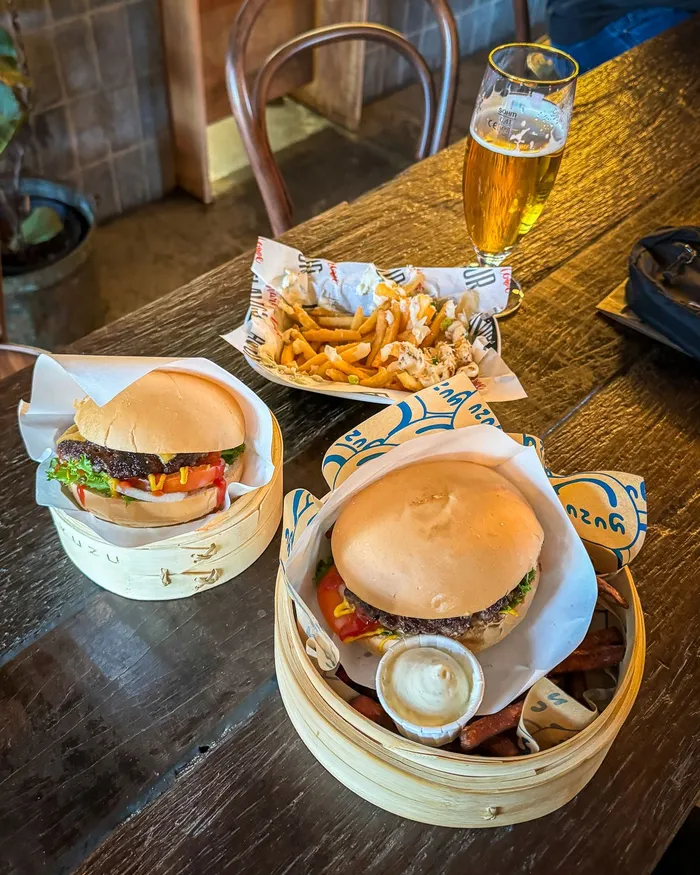
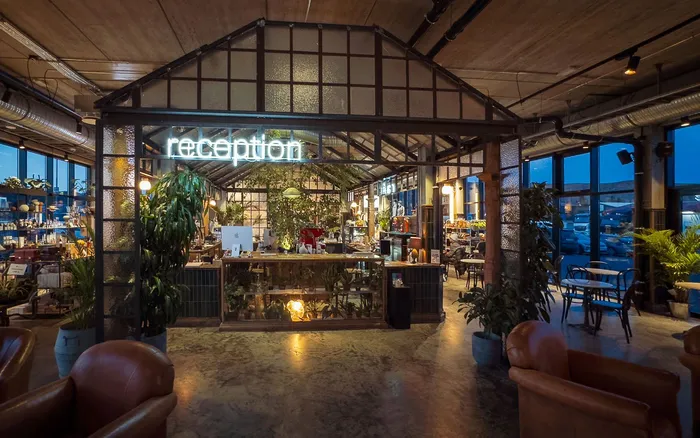
Our favourite for a night on the Golden Circle. The 4-star hotel is right in Hveragerði, an architectural eye-catcher with greenhouses and a view of the geothermal river. On the ground floor there’s a food hall with seven restaurants and a bar, plus shops, an ice cream parlour and a small supermarket. The rooms have everything you need.
Ideal location: 70 km from Keflavík Airport, 55 km from Geysir, 40 minutes to central Reykjavík. Perfect as the start or end of the route and for continuing south.
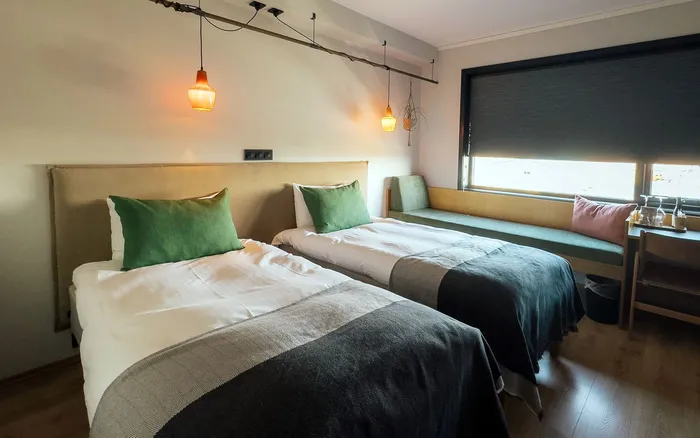 The Greenhouse Hotel, our double room
Astro Laugavegur, Reykjavík
An apartment with one bedroom plus a sofa bed, centrally located in Reykjavík, in theory also suitable for 4 people. A good base for a day trip to the Golden Circle.
Exeter Hotel, Reykjavík
A stylish design hotel in Reykjavík’s old harbour, right by the Harpa concert hall. With its own restaurant, bakery, sauna and gym. It belongs to the Keahotels group, which we can also highly recommend in the south of Iceland.
Campsites
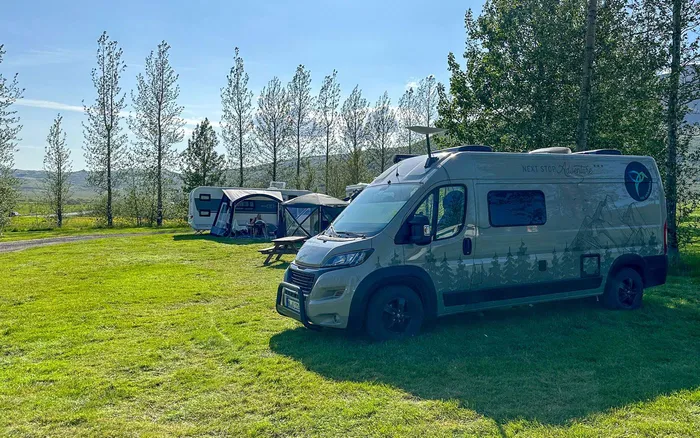
On the Golden Circle we have several tips for spending the night in a campervan (or tent).
Hafnarfjörður Campsite (south of Reykjavík)
A small, cosy campsite with only 8 pitches, so be sure to book in advance on parka.is. The owner is nice and the pitches are marked out. Showers, washing machine and dryer are free. By bus to central Reykjavík: around 40 minutes (single ticket via the Klappið app, approx. 570 ISK). An ideal base for starting the Golden Circle.
- Adults 1,900 ISK (off-season also 1,300 ISK)
- Showers, washing machine and dryer free
Reykjavík Campsite
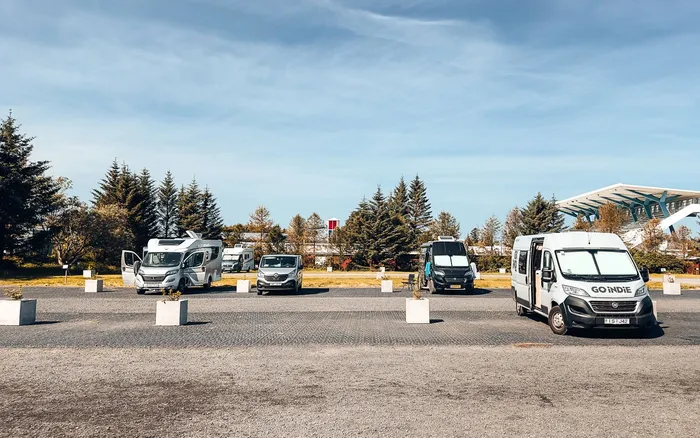
A large, functional campsite right next to the swimming pool. Book early, the cheap campervan pitches go fast. In summer there’s always something going on (and next door there were football tournaments almost every day during our visit, from 8 am). With an e-scooter (Hopp app) you’re in the centre quickly, on foot it’s about 40 minutes.
- Prices vary by pitch and date. Book early, as it fills up fast and access is by code only.
Þingvellir National Park campsite
Right by the national park’s visitor centre. There are actually three sites, one of them for tents only. A huge grassy area, but only two showers for all guests. Handy if you want to start early in Þingvellir the next morning.
- Adults: 1,300 ISK (18 and over), electricity: 900 ISK
- Showers (only two), washing machine and dryer
- Three campsites, one of them for tents only
 Þingvellir campsite on the Golden Circle in Iceland
Camping Geysir, Haukadalur (our favourite)
Right next to the geothermal area, it hardly gets any better. The owner was very friendly and gave us a few tips at check-in. Early in the morning you can watch Strokkur before everyone else.
Note: on Park4Night people often claim that the owner turns off the hot water. That’s not quite true, and he explains it at check-in.
- Adults: 2,500 ISK, showers: 500 ISK (5 to 9.30 pm), electricity: 1,000 ISK
- Washing machine and dryer cost extra
FAQ
How long does it take to drive the Golden Circle in Iceland?
6 to 8 hours are enough for the three main stops. If you want to see more highlights and take it easy, allow 2 to 3 days.
Is the Golden Circle worth it as a day trip?
Yes. If you’re short on time, a day trip makes total sense. You can easily see Þingvellir, Geysir and Gullfoss in one day. More time makes it much more relaxed, though.
Do I need a 4x4?
Not for the Golden Circle itself: Route 35 is paved and easy to drive. A 4x4 is only worth it if you also want to drive gravel roads or reach spots off the main route.
Does it cost anything to visit Gullfoss?
No, entry and parking at Gullfoss are free.
Can you drive the Golden Circle in winter?
Yes, the main route is open all year. Individual roads (e.g. Road 435 at Þingvellir) can be closed when there’s snow. Microspikes for your shoes are a must in winter.
There’s a good reason the Golden Circle is Iceland’s most visited route, but it only shows its full charm when you set the pace yourself. No tour bus picking you up again after 20 minutes at Geysir. No fixed schedule that makes you miss the sunset at Gullfoss.
I love driving this route again and again, in summer and in winter, with a camper or a rental car. Iceland is almost guaranteed to surprise you here. And if you didn’t manage to see everything: you always come back to Iceland anyway.
Useful links: my recommendations, this is where I book
If you book your trips or gear through my links, I earn a small commission. This helps me fund this travel blog (tech & hosting). Thank you for your support and for being part of my community. Thank you so much for your support!